女帝
배상훈 프로파일러, 장미란씨 사망 사건에…"타살 가능성은 51.1%"_我的网站

A |
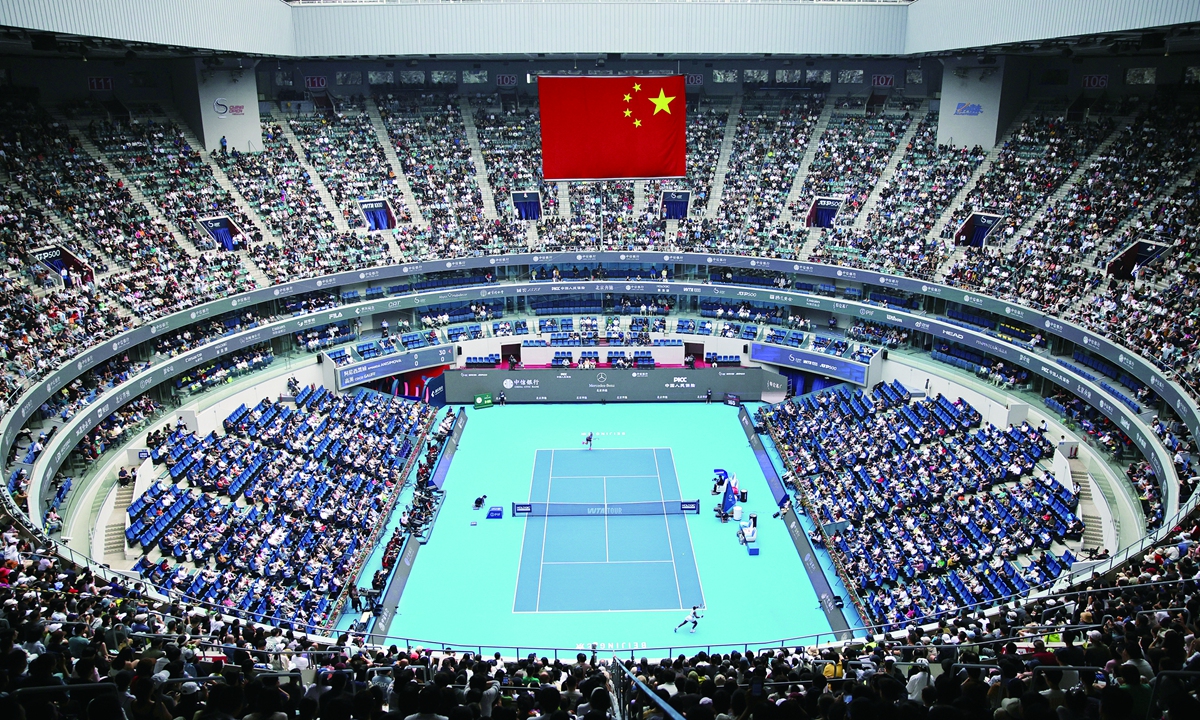
A scene from the women's semifinal at the China Open in Beijing on October 4, 2025 Photo: VCG
As international tennis tournaments multiply across China this autumn, organizers are increasingly looking beyond the court, seeking to turn a trip to a tournament into a broader travel experience.
The 2026 Chinese tennis season, starting in September, will bring a series of international events to cities including Chengdu, Hangzhou and Suzhou besides flagship events in Beijing and Shanghai.
The growing concentration of tournaments is giving Chinese cities a chance to connect sporting events with local consumption, cultural activities and tourism.
Shanghai offers perhaps the clearest example of how that strategy is developing.
In 2025, the Shanghai Masters attracted more than 250,000 spectators, with about 10 percent coming from overseas and 60 percent from outside Shanghai, according to the Shanghai municipal government. The tournament also generated more than 100 million yuan ($14.8 million) in ticket revenue.
The figures have encouraged organizers and city authorities to think beyond the traditional model of selling a ticket to a tennis match.
During this year's Shanghai Masters, ticket packages will include options combining matches with direct transportation, family experiences and visits to other Shanghai attractions, the organizers have announced.
The approach fits into Shanghai's broader effort to use major sporting events to attract international visitors.
The experience in Shanghai suggests that the relationship between tennis and tourism can work in both directions: a tournament brings people to a city, while the city gives spectators reasons to stay longer and spend money beyond the stadium.
For host cities, making tennis more than a sporting event can also serve as a platform for destination marketing, particularly when the event attracts an international audience.
Sports tourism can offer cities something that conventional sightseeing does not, according to tennis commentator Chen Chi.
"Tennis events can activate destinations and build recognizable identities," Chen told the Global Times. "The international player base and global fan following of tennis give host cities an audience well beyond their local audiences, which is widely seen at the Grand Slam events."
The challenge now is to make those visitors stay longer and explore more of the host city. That is where the "ticket plus" model comes in.
Rather than simply asking visitors to buy a match ticket, organizers are increasingly packaging the tournament with hotels, transportation, attractions and other experiences.

Foreign tourists wearing traditional Chinese
hanfu visit Suzhou, East China's Jiangsu Province. Photo: VCG
Culture mattersIn Suzhou, East China's Jiangsu Province, organizers of the WTA 125 Suzhou Open are trying to connect the tournament with the city's existing cultural resources.
Zhou Yunsong, tournament director of the Suzhou Open, said the timing gives spectators an opportunity to combine a tennis trip with a holiday as it partially overlaps with the annual National Day holidays.
"For our spectators, this is a rare opportunity to combine watching tennis with travel. For domestic tennis fans, they don't have to take time off work as they normally would," Zhou told the Global Times.
The tournament venue, the Yangcheng Lake International Tennis Center, is located near several cultural and commercial areas in Suzhou.
The event has also introduced a hotel-and-tennis package, while organizers have arranged cultural experiences for players, including visits to Suzhou's gardens and local cultural venues.
"To give players an immersive experience of Suzhou's charm, we have planned a range of cultural activities, including visits to the Suzhou Museum, tasting authentic Suzhou cuisine, listening to Kunqu Opera, trying on traditional Chinese
qipao and visiting embroidery workshops," Zhou noted.
Zhou sees a broader change in the way people plan trips.
"Traveling to sporting events is becoming a choice for more and more people," he said. "In the past, tourism was about sightseeing - going to a destination, taking photos and checking in. Now, especially among younger generations, people are more inclined to take themed trips."
The idea, he said, is to use the tournament as the starting point for a much wider city experience.
"We hope Suzhou can, with the professional tournament at its core, connect all of Suzhou's tourism resources, including its food, gardens, water towns and shopping, so that visitors can travel around the city for the sake of one match."
Players as ambassadorsFor international tennis, this model has another potential advantage: The players themselves can become part of a city's tourism promotion.
Beijing, for instance, is bringing the players themselves into the tourism story. Li Xuhua, general manager of the China Open, said the tournament plans to give players more opportunities to experience the city.
Current world No.1 Jannik Sinner is among the players who are invited to participate in a hutong (traditional alleyway) tour during his stay in Beijing, Li told the Global Times.
The China Open is also expanding its off-site activities this year.
Li said the tournament will work with the local government to establish more match-watching venues in major commercial areas, allowing people to experience the tournament outside the main tennis center.
"The information from the tennis court can go out and reach people around the city," Li said.
For organizers such as Li, the goal is to make the tournament a broader part of the city's cultural and public life.
"We want this rare tennis carnival to be richer and more colorful, and to give fans more time to experience the appeal of tennis," Li said.
The emerging model is still at an early stage as different event organizers are exploring their own strategies. But the direction is becoming clearer: Tournaments are being used not only to fill seats in stadiums, but also to promote cities as travel destinations.
。
"모르는 곳에서 자살하는 경우 거의 없어""'목맴사' 공개적으로 얘기한 건 경솔"지난 5월 실종된 장미란씨(37)가 실종 104일 만에 제주시 한림읍의 한 야자수 농장에서 숨진 채 발견된 가운데 배상훈 프로파일러가 "타살 가능성은 51.1%"라고 주장했다.
배상훈 "증거 소실돼 재구성에 어려움 있을 듯" 26일 장기실종 장미란씨의 시신이 발견된 제주시 한림읍의 한 야자수농장에 가림막이 설치돼 있다. 연합뉴스배 프로파일러는 26일 YTN 라디오 '장성철의 뉴스명당'에 출연해 장 씨의 사망원인과 관련해 야자수 농장에 들어간 경위와 직전 동선을 확인해야 한다고 강조했다.그는 "의문을 해소할 수 있는 몇 가지 지점은 (장 씨가) 야자수 숲이라는 공간에 대한 경험치가 있느냐는 것"이라며 "무작정 자기가 잘 모르는 곳에 들어가 자살하는 경우는 거의 없다. 왜냐하면 거기가 어떤 곳인지도 모르는데 그냥 들어간다는 게 말이 안 되지 않느냐"고 말했다. 이어 "이 부분이 해결돼야 하고, 그걸 해결하기 위해서는 바로 직전까지의 동선이 필요하다"고 덧붙였다.배 프로파일러는 경찰이 장 씨의 사인을 '목맴사'로 추정한 데 대해서는 "경찰청장이 국회에서 목맴사라고 공개적으로 얘기한 것은 사실 경솔했다고 생각한다"고 지적했다. 이어 "'변사' 정도만 얘기했어야 하는데, 자살이라는 느낌을 주는 얘기를 해버리니까 선입견이 생긴다"고 말했다.그는 또 "질식해 사망했다는 것 외에는 아직 밝혀진 게 없다"며 "타살이 될 수도 있고 자살이 될 수도 있고, 아니면 다른 제3의 사망 원인이 있을 수도 있다"고 했다. 그러면서 "문제는 시신에 남아 있어야 할 증거들이 소실돼 그것을 재구성하는 데 어려움이 분명히 있을 것"이라며 "사실 불명으로 남을 가능성도 분명히 존재한다"고 덧붙였다.사건을 허위 종결했다는 의혹을 받는 A 경장에 대해선 "그 정도의 문제를 일으키는 경찰이라면 애초에 해임·파면됐어야 하는데, 이 사람의 이런 말도 안 되는 망동을 누군가 봐준 것"이라며 "실종팀장, 형사과장한테 반드시 응분의 책임을 물어야 한다"고 말했다.
"장미란씨 유서 발견 안 돼…우울증 치료 내역도 없어" 경찰청은 제주 장기 실종사건 허위 종결과 관련해 제주서부경찰서장 등 지휘 라인 4명을 대기발령했다고 25일 밝혔다. 사진은 이날 제주서부경찰서의 모습. 연합뉴스앞서 경찰은 지난 24일 오전 10시46분께 제주시 한림읍의 한 야자수 숲에서 시신을 발견했다고 밝혔다. 부검 결과 시신은 장 씨로 확인됐다. 경찰은 시신이 발견된 당시의 자세와 위치 등을 토대로 장 씨가 목을 매 숨진 것으로 추정하고 있다. 시신이 발견된 현장에서는 저항이나 다툼의 흔적이 발견되지 않았으며, 외출 당시 입었던 옷과 슬리퍼, 금팔찌와 반지 등도 모두 착용한 상태였던 것으로 전해졌다. 다만 현장에서 유서는 발견되지 않았으며, 우울증 치료를 받았거나 관련 약을 처방받은 기록도 확인되지 않은 것으로 파악됐다. 경찰은 현재 모든 가능성을 열어두고 조사 중이며, 현장에서 발견된 휴대전화에 대한 포렌식을 통해 고인의 마지막 행적을 파악하는 데 주력할 방침이다.。
Current article:http://trj094h.pisezuibanzoukou.cyou/news/20260826_726.html
Published on:20:04:35